Showing posts with label essay. Show all posts

28 March 2019

Inner World of Truth and Beauty


 Tossing Up the Rainbow Bubbles by Ida Rentoul Outhwaite, CA 1931

These past months since the eve of this year, I found myself in between times that seemed that a lot of things are no longer making sense. And it's not about me anymore or what I actually demand of the world, but how things are happening and what they are supposed to be according to the expectations of the people around me are going through constant contradictions. The disparity becomes overwhelming when the unavoidable and the unexpected happens and one is gripped to hold on even in the presence of helplessness in order to survive. I suspect that this is not limited in today's world, but is always present since human beings had formed the sanctum of inner self-awareness, that there will be many instances in the lifetime of a person that one's foundation of values are not compatible in present reality - and one has to compromise them in order to survive. Most often, the problems that one also encounters in life are not because of own personal follies, but in dealing with other people, and the immense pressure of adjusting to them to the point of sacrificing one's integrity.   

There is this beautiful and timely quote by Marion Woodman, a Jungian analyst, about going through these changes of self and one's own point of views, 

There comes a time in your life when you know that the life you have been living is over and you don't have a clue who you are becoming.

This is apt because these realizations spark the beginning of changes in ones own life and self. They may not at times, seem visible to the senses but they are perceived within ones own mind. In this process is a gradual discarding of ones deeply held beliefs not because one is helplessly adjusting or adapting to the outside world, but because they no longer stand the test of time and are no longer helpful to ones self and well-being. Why am I thinking about this? On the first day of this present month, I was finally able to submit the hardbound copy of my graduate school thesis and at last, earned a long-awaited end of obtaining my diploma after few days of submission. I felt a sigh of relief, of having a dark cloud above my head go away, and felt the burden of waiting removed from my chest and my head.

However, the initial excitement of having finished the degree gradually waned and it was replaced with feelings of betrayal and disappointment. These feelings were due to circumstances that revealed the not-so-good motives of many people whom I trusted, and as a whole in the entire profession itself. This sense of realization for these feelings were what I had, in the recent years before I decided to want to practice my field again lead me to turn to other diversions which, I was fortunate enough to have contributed to my spiritual and intellectual growth.

They are not new to me, and seeing them arise again through people and circumstances is now, eventually leading me to think and move forward to refining my set of values, and to at least harness them in this constant growth process. This reconsideration is not limited to people, but in critiquing what needs to be critiqued, to constantly strive for authenticity, to stand on ones truth, and to never deceive oneself or other people.

Hypocrisy is often a mask that is worn by people to hide their hidden agenda, and it is not advisable nowadays to trust everybody. Caution is the key and it is important to reserve one's attachments to those who, through the test of time had earned one's trust and moral support.

And I think, with these thoughts and musings that I came to realize that to sacrifice one's own truth to accommodate or to fit into the mold of other people's standards or values is not worth it if it costs one's own health and growth and the price is disappointment and betrayal. The essence of ones own boundaries and truth is important in a world that constantly gaslights and manipulates you to follow its whims of who it expects one to be and abandon the spark of the inner world of truth and beauty.

02 November 2018

Looking Back

A few years ago, 2012 to be exact, I remember making a wish-list for myself. The list included the following items: a pair of boots, a digital SLR,  bookshelf, stability and balance, optimism, strength and powerful reasoning, peace, justice, happiness and new love. My list during that time seemed almost impossible, since I could hardly afford any expensive material things including gadgets or heavy pieces of furniture. I was very particular at saving what I have to buy books or necessary stuff that I can use everyday, and those items seemed almost like luxury.

However, unexpected events happened that lead all of those material wishes to eventually find their way to reality, and much more unwritten wishes coming to life. Certainly, there were mishaps and misfortunes, a great deal of frustrations, sorrows and disappointments - but the solace of reading and solitude, persistence in the presence of troubles; and personal detachment - perhaps enabled me to pass through as the years went by.

It is very difficult to pass the years when I don't share most of the values of the people around me. It can be terribly alienating. Very often, I question my individual integrity and happiness, and if it is possible to be at peace within myself if I just follow what is expected of me instead of what I strongly believe in. Even reality presents itself in various ways that sometimes, I doubt if what is being called 'reality' is even reality at all. Time passed by so fast without me noticing it. Sometimes, I get so absorbed in many activities, but at the end of the day when I process what had happened, it just seems that it was just a dream that slowly fades away in memory. Everything, it appears, is just a Distraction: away from the certainty of life, and the fact that it is just a Distraction is a reason that anticipating mishaps or worrying about the future is pointless.

Looking back since six years after I wrote the simple wish-list, I am grateful to have acquired both material items, except for partly some of the intangible items that were included on the list. Maybe, because I think that items such as justice and stability are unattainable. There is no perfect justice in this world, not even stability. Chaos, uncertainty and suffering are everywhere - they exist in the human mind and they are present in the external world. However, it is a necessity to at least lessen suffering even in small individual acts and to re-arrange chaos to a form which, if not pleasant, is at least tolerable to the beholder.

This year, as I reflect for being a year older, I realize that there are values that I held firmly that need to be discarded. Years were spent reflecting on them and it dawned on me that they are no longer necessary in my journey. There are, however, thoughts and beliefs that will stay - but as a whole, I can definitely say that I am no longer the same person when I was younger. I can no longer hold on to many things that weighed me down as a person even if they were present in my darkest years, and they need to be outgrown and kept away neatly at the boxes of memory.

Neither do I have to pretend or to act to be somebody I am definitely not, or to fake a facade or emotions to show to the world - that to me is a betrayal of individual integrity and authenticity. A lot of sufferings in the human condition are caused by people faking their real selves and showing false emotions to manage the impressions that other people may have on them. You do not have to smile if your heart is aching inside. Let your pain and suffering express themselves, but never forget to confide your innermost thoughts and feelings only to the people who value you and can safeguard your humanity and dignity.

For this year, I can definitely say that I am grateful for having accepted and expressed my authenticity to myself and the people in my life. I have distanced and cut myself from anything or anybody who have caused me hurt or betrayed me, I became in tune with my inner self by setting time for self-reflection and by doing what I am passionate about, to have forgiven my mistakes and the past, to constantly make the effort to change what is unpleasant about my actions to other people, to be more self-reliant and kind to people and living things, to never ask for personal validation, and to have nurtured my intellectual life.

Last July to September, I was able to teach at a university - a milestone and a dream come true even for the time being. On August, I was able to present my Masteral Thesis at graduate school, which I had been writing since last year; last week I traveled out of town to visit National Museums at Manila, and this weekend, I traveled with my family to Baguio City. I only produced meager paintings this year, but both were fulfilling because the process reminded me of the joy of seeing colors coming together to form a finished work.

Material-wise, I had a new computer, a new set of books, a new easel, and a new printing machine. Relationships with my family had improved this year, and I had wonderful colleagues during my short stay at the university. What the future is, I do not know. I just hope that I finish my Masteral degree this year so that I can focus on preparing for writing new researches on my field and helping other people, or to continue teaching. I'm reminded of a quote by the author and writer, F. Scott Fitzgerald, because it reflects my mindset this year, that growing older liberates a person from the past because what the future has to offer is a new beginning,


The future is always open for possibilities. Plans are rough estimates of how we envision things or events may happen, but they do not always turn out how we expected them. This openness of the future is what makes life, I think, in-between the certainties of death - its charm and mystery that humanity may never fully fathom or understand.

30 March 2018

My View of Positive Psychology on Assessment and Personal Experience

Positive psychology, as a practice, discipline and developing science had been in the development of psychology, a response to a pathology-centered view of the human being and mental states that were the starting points of depth psychology and psychodynamics. It focuses on the strengths that enable individuals and communities to thrive, founded on the belief that people can lead satisfying and meaningful lives, that they have the ability to nurture what is best within themselves, and that they can improve their experiences of love, work, and play.
 
It is surmised, based from both disciplines, positive psychology and depth psychology are on a magnified level, as to how they are popularly presented, highlight only a limited picture of what they are actually proposing on their views of the human person and these also account to the practice of assessment and identification of psycho-pathology. However, it seems to me that they are both sides of the same coin, and they are necessary not only in flexibility of practice in assessment and therapy, but also on assisting individuals to lead better lives, make better decisions that are suited to their choices and respective backgrounds.
 

In assessment, in response to a referral question, it is necessary to view the individual on a holistic perspective, identifying not only the existing problem, but also the strengths of the person. Positive psychology is based on the Humanistic tradition of psychology that believes in the inherent capacity of the individual to overcome challenges. In the assessment process, it assists both the client and the clinician to identify what specific aspects of the client can be drawn upon to address the problem, pathology, or the context of the referral question. It is the strengths of the individual that can also address the pathology; and assessment and the therapy processes assist the individual on gaining insights on how to tap on the inner resources – by focusing on aspects such as ability, resilience, hope, creativity, mindedness, wisdom, courage and responsibility - positive psychological strengths that can be found within the person.
 

For me, positive psychology is not in a sense reduced to feel-good shallow psychology, and it has a lot more to it than how it is popularly conceived. It is developed in landscapes that are faithful to the experience of the human being – it affirms the realities of life that are both experienced as being pleasant and unpleasant, and derives from these experiences the motivation of the individual to thrive in the presence of these realities. However, my view of positive psychology despite its affirmations of human realities is that it is proactive and it places responsibility not only on the individual but also on the context and environment, and in that proactive sense, it does not turn blindly to status quo situations that prevent the realization or achievement of the potentials of the individual person. As I am towards my way of helping other people through the practice of psychology, the science of positive psychology is teleological and goal-oriented; it is helpful in making concrete directions to therapy to assist the clients, through their identified strengths and abilities to formulate their goals and plans, not only to overcome psychological barriers, but also to lead fuller lives.
 

Finally, regarding my personal experience of flow, I recall the moments when I used to make paintings, especially in the process of mixing colors on paper. I was very absorbed on the activity of seeing my hands and paint brush move across the paper, how colors would combine, patterns emerge, lines, landscapes, petals, bricks, leaves; until the whole picture was formed— I lose my track of time and everything seems to revolve around the watercolor painting that I was making. Other situations are when I am reading a book, getting lost in thought when I am alone, or when washing or folding clothes. These and other activities that I enjoy doing make me feel more balanced and less worried; they channel my energy and other tensions that I experience when situations are not really going well for me, and these activities and the flow-states assist me on making ideas and better judgments, see alternative ways of framing situations, analyze confusing circumstances, or simply just to appreciate the unnoticed beauties of life. Nurturing flow is as essential as doing everyday tasks, I see to it that I am able to do things that I enjoy and through these things I experience flow-states. And in my opinion, to reach the particular state of flow where time seems to float in space is akin to the experience of bliss – a transcendent state, which is actually a very rare occurrence in a busy and distracted world.
 

References:
 

Seligman, M. E., & Csikszentmihalyi, M. (2014). Positive Psychology: An Introduction. In Flow and 
     the Foundations of Positive Psychology (pp. 279-298). Springer Netherlands.
 

Csikszentmihalyi, M. (1999). If We are so Rich, Why Aren't We Happy?. American Psychologist, 
     54(10), 821

17 August 2017

Lately

It was probably more than a year since I wrote thoughts here, and there were so much things that had happened since then. It was October last year, that I had my first formal job. Things happened by so fast, that after a long day, I had to process everything, but it was often overwhelming. And admittedly, there were so many lessons learned through all those months, and still a lot to learn.

The setup at my work was located at a province some five hours travel by bus. My duty was during weekdays and I had my regular day off during weekends. The place was very far, and in order to get to work everyday, I had to walk kilometers if there was no available transportation. The climate was harsh and the location was located at a military camp. Through barely a year, I braved through walking alone, and to deal with many kinds of people, including a toxic work environment and colleagues, but nonetheless patients with whom I learned a lot from as well. The contrast was that, when colleagues are pulling each other down through intrigues and false stories, I learned to vocalize and educate my patients and in the process learn that in helping others, one can in turn discover that one can also help oneself. It was like theories are unfolding in real life and they no longer were mere ideas or words written on paper. In Filipino, I can say it was an experience of 'tibayan ng loob' or strengthening of ones will. Then, I came to learn how envy, hatred, disrespect, lust for power and toxicity can exist even on whom one cannot suspect people to have. It was when one discovers to how much extent one has to adapt and compromise - without losing oneself and ones sanity in the process. I can only imagine the turmoil I had experienced in order to see I made it through. I thought, now I'm just beginning to see the realities of what I had chosen, and somehow though that what I was willing to share could help improve the system, I was eyed with anger and malice. And then an incident happened that made me suddenly resign and here I am starting again, finding my niche anew. 

It's true that one cannot live entirely deceiving oneself that reality exists the way we see it through rose-tinted spectacles, there's so much out there that could severely test our ideals. No matter how much we might be willing to give, impart, or contribute - the tests can be so devastating that it can make or break our will or even make us feel disillusioned that what we had held so dear might not even be how they really seem. 

But despite it, it will always be a constant journey of learning and self-renewal, of new discoveries. In the process, pain, frustration and disappointments happen, we can see ourselves falling back into occasional experience of despair and rejection which is a time and an opportune to reflect, process, reconsider, plan and make sense out of it all. When it seems to be it like it is the end of it, a time suddenly comes when we also become tired of our own situation, boredom sets in, and then a renewed sense of energy grows within. That's definitely a sign that a new beginning is about to set. One can never get stuck on one place only isn't it? The ups and downs are signs of life, anxiety, worry, fears, and the anticipation of the unknown sets in, who knows it will be the start of something new, a prelude to what we are yearning for even in our unconscious minds.

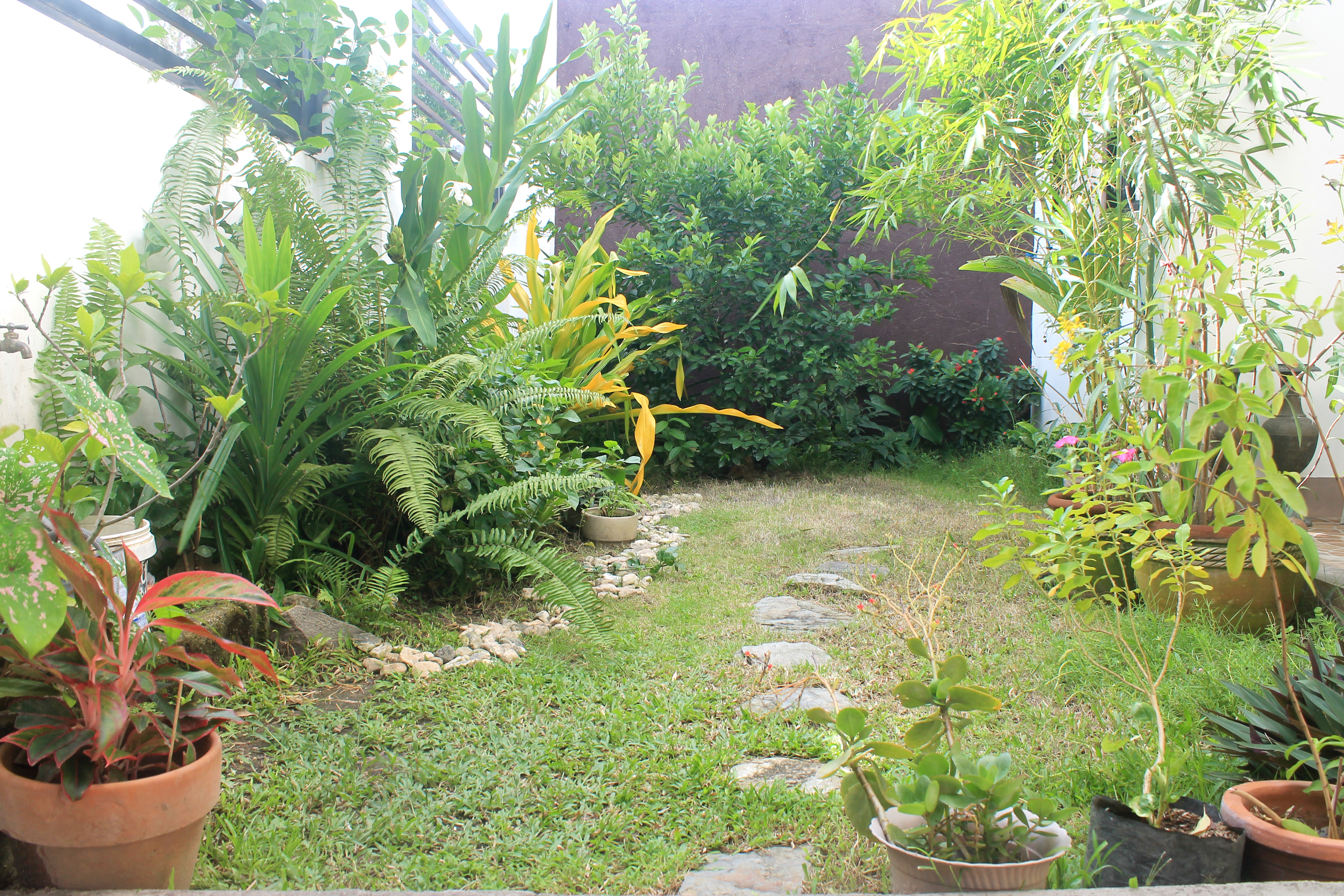
These are some photos I had been taking these past few days, some little reminders that life can be refreshing and calm, and sweet! By the way, I'm currently on a project, patiently waiting for my thesis proposal schedule, and I hope these coming days I can write a little bit more frequently here!

Love, Maica

https://www.flickr.com/photos/thepetitemuse/35905771271/in/dateposted-public/
https://www.flickr.com/photos/thepetitemuse/36176279846/in/dateposted-public/
https://www.flickr.com/photos/thepetitemuse/35824509580/in/dateposted-public/
https://www.flickr.com/photos/thepetitemuse/35824604090/in/dateposted-public/
https://www.flickr.com/photos/thepetitemuse/35912215710/in/dateposted-public/
https://www.flickr.com/photos/thepetitemuse/33745544676/in/album-72157675165468574/
https://www.flickr.com/photos/thepetitemuse/36436544272/in/dateposted-public/
https://www.flickr.com/photos/thepetitemuse/36605317145/in/dateposted-public/

(Hover and click each photo for detail)

29 January 2016

Book Review: The Structure of Scientific Revolutions


I can understand why probably the author thanked his family for their consideration of the author's efforts towards this book, because it must have demanded a lot of painstaking effort not to mention time. I would have given it 3 stars for its complicated way of delivering its points, the language is highly complex that it tends at many certain points throughout, that the arguments contradict each other. Five stars, however for its complexity and taken as a whole it is actually coherent. The contradictory statements can be attributed to the fact that in science or fields of science, there is a particular paradigm that practitioners adhere to. However, this paradigm at specific points in history, encounter change brought about by new discoveries, anomalies or crises that can disprove it or demand that it be rejected or replaced. In this process, as what this book points out, there are resistances by scientists whether they will discard this paradigm or replace it - and thus, the phenomenon of Paradigm Shift will occur or whether practitioners will stubbornly cling to the original paradigm.

This historical process is nuanced and subtle because scientists even though they are eager to discover new phenomena on their field or contribute something original - are prone to protecting that particular paradigm that they follow. But crises and anomalies do certainly have to occur and be encountered, thus earlier theories have the potential to be discarded or new theories modified in such a way as to reduce contradictions with earlier theories. The gradual process of resistance and/or acceptance is highly nuanced and complex, hence the nature of this book. The presentation of analyses of the author can also be the reason why the book received critical comments particularly by philosophers of science, for instance, there was a comment whether 'he believes in reality?' Towards the end part, there is also the question of the evolution of human knowledge, whether it has a telos or whether, as compared to Dawinian concept, it evolves by itself towards a certain progression of which the goal is unknown.


No theory ever solves all the puzzles with which it is confronted at a given time; nor are the solutions already achieved often perfect. On the contrary, it is just the incompleteness and imperfection of the existing data-theory fit that, at any given time, define many of the puzzles that characterize normal science. If any and every failure to fit were ground for theory rejection, all theories ought to be rejected at all times. On the other hand, if only severe failure to fit justifies theory rejection, then the Popperians will require some criterion of "improbability" or of "degree of falsification". In developing one they will almost certainly encounter the same network of difficulties that has haunted the advocates of the various probabilistic verification theories [that the evaluative theory cannot itself be legitimated without appeal to another evaluative theory, leading to regress].


The author also contrasted his analyses with Karl Popper's method of falsification and demarcation of knowledge, and stated that this method as espoused by Popper, needs a certain criteria as where to base the falsification of theories, and what qualifies that criteria? Or if that criteria were to be stated, an infinite regress is inevitable. "Truth" is not the criterion of scientific knowledge, because it will have a tendency that once that "Truth" was discovered, that will mean the end of scientific search for knowledge - this is where Kuhn and Popper meet. However, whereas Kuhn would propose the concept of "Paradigm Shift" (he actually used the perceptual psychology concept of "Gestalt" in this sense), Popper proposed the method of falsification of scientific theories. Kuhn's concept can be regarded in the sense, that it is what actually happens in the enterprise of science (it is the actual event), but Popper's falsification even if it is used by practitioners remains an ideal method and the question arises, as to what specific criteria will that 'falsification' be based upon? That will have to be addressed, and I hope will be clarified on my reading of Karl Popper's "The Logic of Scientific Discovery" or "Logik der Forschung".

Although both concepts by Kuhn and Popper appear to be antagonistic as written by critics, I'm looking forward that in a way, what they actually proposed as regards their method of inquiry and analysis are reconcilable. After all, scientists and philosophers even though they devise systems of inquiry and discover phenomena, are not that arrogant to claim that they know the "Truth".

10 January 2016

Book Review: The Teleological Ethics of Fakhr Al-Din Al-Razi


This monograph was adapted from the doctoral thesis of the author on the field of Islamic Intellectual History. It is, according to the author, a contribution to ethical philosophy and the thought of Fakhr al Din al Razi, who is one of the most influential thinkers in Islamic scholarship particularly in the medieval period. It is ironic to note that despite his influence in Islamic scholarship (he wrote a Tafsir [commentary] of the Qur’an), he is understudied.

Quoted from the Introduction,

The study is at once, both a comprehensive analysis of one of one major facet of Al Razi’s thought and an exploration of the main trends and debates in its wider intellectual background. It shows that he sets forth a sophisticated and original ethical theory, which is both eclectic and highly consistent internally.

The present study uses the most comprehensive selection of al Razi’s work to date, several are used for the first time. This has allowed a more accurate understanding of the complex developments that took place in his thought, which are often subtle, but sometimes striking.


Divided into four distinct, yet interrelated chapters, the book discusses al Razi’s metaethics, his ethics of action, his theory of virtue alongside the ethics of character and the influence of theory of virtue on his later theory of prophecy, and finally, an analysis of his work - ‘Censure of the Pleasures of the World.’

Al Razi was initially trained in the Ash’ari school of theology and later, he became acquainted with other schools of thought particularly the Mu’tazila and the Falsafa. The book discusses how he was able to synthesize the influences he had acquired from these schools of thought and his theological foundations through the Kalam methodology which he was able to review and revise throughout his intellectual career.

His theological foundations, however, remained intact despite the aforementioned influence from Mu’tazila and Falsafa, wherein he was able to refute certain notions that these schools upheld which contradicted the orthodoxy (though at certain instances he also departed from orthodoxy).

Al Razi develops his theory of action under the influence of various sources—Falsafa, Ash’ari and Mu’tazili—but he puts forth a unique solution. Although he maintains a number of central Ash’ari doctrines, he often preserves their formulaic, almost creedal, expressions, without much of their theoretical content and details… One debate is concluded by Muhammad Abduh, who remarks, “With al Razi’s explication, the position of the Shaykh [al-Ash’ari] unites with that of the Falasifa ... and the position of the Imam [al Razi] is the position of critical investigators (muhaqqiq)”. (pp.44)

As was mentioned by Muhammad Abduh by al Razi being in a position of critical investigator, he thus, was able to develop an ethical system of thought, which was, however constantly revised, remained consistent in its pessimistic and most often deterministic tone. For example in his statements such as:

- Man is compelled under the guise of a voluntary agent.
- Man is compelled in his choosing.
- Affirming determinism is inescapable.

The book is filled with the interactions between contrasting viewpoints from respective personalities from Mu’tazili and Falsafa such as Ibn Sina and Abu’l Husayn al Basri, including Ash’ari schools: debates, refutations, affirmations and explications – alongside references to al Razi’s works that dealt on the topic at hand.

The author did a great job not only in the citation of ideas and works, on his synthesis of reactions from each respective school of thought and al Razi’s key positions and revisions of ideas, but also on including his commentaries and impressions on these ideas. For example, upon quoting from a work by al Razi, Dr. Shihadeh (the author) then follows it with his own impression on the obvious tone of the passage by mentioning whether it conveyed that al Razi was being absolutely pessimistic on his view of, for example that ‘political ambition should not be pursued by a reasonable man,’ or for his deterministic tone, that ‘man is much more motivated to avoid pain than to pursue pleasure,’ or ‘man is compelled in his willing,’ or to what extent an idea or position stated had changed from a previous one.

The book was written in a non-technical easy to understand style. However, a background in Islamic theology, history, psychology of the instincts, philosophy (particularly theodicy) is recommended for the reader who would like to read this monograph.

Because of its academic treatment of the subject, I personally recommend it to the serious student of Islamic intellectual history due to its neutral, unbiased and balanced treatment of the topic at hand.


27 October 2015

Book Review: An Enquiry Concerning Human Understanding

An Enquiry Concerning Human UnderstandingAn Enquiry Concerning Human Understanding by David Hume


This was my first whole reading of an actual work by David Hume and it is such an experience to have read something straight from the actual philosopher instead of bits and pieces of biography or explanation of his ideas. The book was a revised form of his first work, A Treatise on Human Nature, which was not received with eagerness by the public upon its first publication.

First, my impression of Hume's style was that he was frank to the point of being humorous at times with how he pokes at the way people think, behave and react within themselves and their environment. His choice of words and the presentation of ideas were presented in a clear and logical style. Just like any thinker, he considered himself  unrestrained in going against what he thought were unreasonable beliefs, superstitions, and reinforced dogmatism, and as such, allowed himself to go deep in continuous process of questioning in matters of human thought and reaction, events, and the material world.

It is only experience, which teaches us the nature and bounds of cause and effect, and enables us to infer the existence of one object from that of another. Such is the foundation of moral reasoning, which forms the greater part of human knowledge, and is the source of all human action and behaviour. 

He employed a rigorous style of empirical thinking and the way he deduced what he advocated to be the way to have a correct understanding of things is through reasoning by analogy. All throughout the book, the theme of cause and effect resulting to experience recurred in all of his ideas, and it is through this means of analogy, by applying ones understanding of experience to something newly encountered, that he applied what he thought was the correctness of knowledge in human thought and the natural world.

In this book, (though I may consider giving it a second reading), I found two striking arguments that Hume made: concerning the existence of God, and of the material world.

In the first pages, he acknowledged the existence of a Creator by whom everything in the universe is dependent upon. But in the middle of the book, he went on to apply his method of analogy and causation to God. According to him, every effect must have a cause that brought it to existence. For example, the footprint on the sand near the sea must have been caused by a person who walked on the sand. What made us arrive at such a conclusion was we had been taught by prior experience that such a cause (a person walking) led to an effect (footprint on the sand), and therefore, we gain an understanding of the effect simply of our previous experience of actually perceiving the cause. This was his way of rigorously applying his empirical thinking which is limited to what is 'observed and experienced' and then to discard everything that does not conform to this method. But then, he went on to say that the existence of God cannot be justified because even though we see the creation (which is the effect), we have no direct actual experience of its Cause (God), so how can we prove the logic of His existence?

This is where the limitation of logic and rigid empiricism is shown, though Hume will not accept it. Reason will always have its limitation, as much as Faith as how Hume subjected it with criticism will have its limitation as well. Now that in this book, Hume established how human understanding can be subjected to many factors that will deem it susceptible to many kinds of errors, so too, does his method of reasoning by analogy and experience can be subjected to similar flaws. Despite the comparison of what we know of objects and experiences, that does not negate the fact that each are distinct from the other with their own unique qualities. In the case of the Creator - he applies analogy, but he disregards that the Creator is distinct and His Attributes are different from His creation, and therefore for him to make an analogy in the context of the creation is unreasonable. Thus, Hume becomes a victim of logic by the fact that he failed to see the difference between what and whom he is trying to compare, because he reduced the notion of 'qualities' to abstract ideas existing only in the human mind.

Much criticism can be attributed to religious interpretations as practiced by so-called religious people, but the depth of faith and wisdom coming from a belief on a Creator will always make a logical sense to humanity. What Hume dealt with is narrowly confined to issues of language, but the expression of language cannot be rid of its subjectivity and sophistry on the part of human beings with the way they express and understand it, in contrast to what reality and the actual world really is.

Human understanding can indeed be flawed, but this flaw allows room for humanity to adapt to an ever-changing world. It has to grapple with continuous change, which may lead to a downward spiral of conflict and chaos or growth, since the way humans think (as influenced both by their innate nature and outside forces) lead them to act on many different ways toward their fellow beings and with the world around them. On the other hand, if empirical thinking as what Hume employed in this book is applied in an absolutist sense and make manifest not only in human thought but in belief, and then subject everything to the limited role of language and reasoning by analogy, including the understanding of the Creator Himself, humanity will be devoid of values and depth of wisdom, and will function merely as robots, and worse, capable of relentless destruction. Language, thought, and experience are thus, among many, are only parts of a complex reality that humanity possess, and irrespective of the perception and resulting expression of these human faculties, there is an external world that exists independently  of human beings. Hume, in this book failed to make a distinction between the perceiver and the perceived. This alludes to the second point.

The second subject was Hume's argument on the perception of the material world. In this book, he did not go at great lengths in discussing it, although his ideas are particularly profound in the philosophical sense:

It is universally allowed by modern enquirers, that all the sensible qualities of objects, such as hard, soft, hot, cold, white, black, etc. are merely secondary, and exist not in the objects themselves, but are perceptions of the mind, without any external archetype or model, which they represent. If this be allowed, with regard to secondary qualities, it must also follow with regard to the supposed primary qualities of extension and solidity; nor can the latter be any more entitled to that denomination than the former. The idea of extension is entirely acquired from the senses of sight and feeling; and if all the qualities, perceived by the senses, be in the mind, not in the object, the same conclusion must reach the idea of extension which is wholly dependent on the sensible ideas or the ideas of secondary qualities. Nothing can save us from this conclusion, but the asserting, that the ideas of those primary qualities are attained by Abstraction, an opinion, which id we examine it accurately, we shall find unintelligible, and even absurd. An extension, that is neither tangible nor visible, cannot possibly be conceived: and a tangible or visible extension, which is neither hard nor soft, black nor white, is equally beyond the reach of human conception.

...
Bereave matter of all its intelligible qualities, both primary and secondary, you in a manner annihilate it, and leave only a certain unknown, inexplicable something, as the cause of our perception; a notion so imperfect, that no sceptic will think it worthwhile to contend against it.
Hume was pointing that the material world cannot possibly exist without human perception consisting of a collection of qualities which were acquired through experience. These qualities are ascribed to objects perceived in the material world, but at the same time, they are abstract in nature and only exist in the mind. This meandering is absurd to common sense, but Hume contends that the perceived world is only a collection of qualities that humans attribute to what they perceive, and the independence of the external world as existing apart from the perceiver seems to be only an illusion. This reminds me of another passage from a book entitled Consciousness by a Neuroscientist, J. Allan Hobson,

If a tree falls in the middle of a forest, does it make a sound?

The immediate answer will be 'yes,' but a philosopher will be inclined to ask, 'what sound does it make if there is nobody to hear it?' So in this case, we have a world which is centered and continuously subjected to human perception - that in Hume's book, is not acknowledged to be existing as independent of human, nevertheless flawed perception and understanding. Though this might be of interest to those who like engaging in questions and matters of the mind, but looking closely, do they purport to have any practical value in the larger scheme of things?

David Hume, in this book, allowed me to re-evaluate on a much investigative level, the ways and the limitations of human understanding. He was frank and brutally to-the-point writer, certainly unconventional, not afraid to present alternative modes of thinking and looking at things, and he has to be commended on his empirical approach which is useful in the Scientific disciplines.

Unfortunately, regardless of how it is presented as an objective/systematic manner, Empiricism has its own limitations like human understanding, and cannot apply in an absolutist sense to matters existing beyond the capacity and scope of reason and observable experience.

09 July 2015

Grief, Authenticity and Hope: A Reflection from the Story of Prophet Jacob

https://www.flickr.com/photos/daves-f-stop/16190888316

As the blessed month of Ramadan is nearing its end, I would like to share a story that is encountered in the Qur'an which has a profound message for those who are experiencing sadness, disappointment, and frustration in life. It is about Prophet Jacob (peace be upon him) and what he felt when he lost his dearest son, Joseph. 

When we lose something or fail at an endeavor that we are working hard to achieve, the pain can oftentimes be too much that it is beyond our control. We may attempt to hide it to others, try to dismiss it or turn to distractions, or those around us would snap us and say, 'just move on with it'. But failing to acknowledge the loss and the pain that it brings only artificially covers it. It will manifest on other forms because it remained unacknowledged. 

When Prophet Jacob lost his son, he fell in a state of immense grief. He was told that his son was killed but he knew that it was a lie, and by Divine revelation, firmly believed that Joseph is still alive. He cried day and night, life almost stopped for the old man. It was by being a father and a human being that he felt this need to grieve and be sad. He did not fight it back, or erase it on his memory just to move with the ebb of life. The mere fact that he knew that his son is alive but not knowing how he is, when will he be coming back or will he be still reunited with him only added to the difficulty that he felt.

It was all too much for him that he lost his eyesight. Sadness, year after year passed. But there is still no news for Joseph. The father waited and waited, with grief and hope that he will still be reunited with his son. Until one day, when it was almost over - that the shirt of his long-awaited was cast on his face and his sight returned. And eventually the vision of the dream was fulfilled and so was the truth and his family reunited.

Denying someone the time to grieve is like refusing to give air to a suffocating person. Not acknowledging the reality of loss and sadness and trying to cover it up with something else is like setting a time bomb that will explode anyway. 

Prophet Jacob mourned because he loved his son dearly, and his disappearance meant that his love seems to have been thrown out of nowhere. Gone is the son who is the object of his affection. He cannot express it anymore, and that loss of the beloved cannot be replaced anymore because of its unique place in the heart of the father. There is no closure. It will not let go, and will not forget because of the certainty that his son is still alive, that the vision that was relayed to him was not yet fulfilled.

This is the case with many of us. The reason why we experience this almost endless pain is that we continue to hold on to what is dear to us. We are hoping that there is still a chance that we will regain what we lost or overcome the disappointments that occurred which happened beyond our control. And so we take the time to grieve, to reflect how it might have been, to acknowledge, to find meaning and to gain once more the will to move forward despite the pain. 

Prophet Jacob never lost hope despite his grief, nor did he turned his back on life. He remained firm in his faith, he constantly turned to God, and to him he relayed his condition. He did not pretend to be strong by denying his sadness. He showed it to his family and those around him how he missed his son so much, and how he is waiting for the day that he will return. He remained authentic and true to his feelings and to his condition, there was no need to pretend or hide his weakness. Despite his lofty standing as a Prophet of God, he did not manipulate what he felt within himself and his vulnerability out of fear of people's judgment. It was his genuineness as a human being that he exemplified, staying true to ones present condition, of not caring the insult or malice of others.

There was no need to put on a mask to display a facade of false strength. It was this acknowledgment of grief, sadness and the presence of pain that Prophet Jacob exemplified: a reminder when frustrations and disappointments come almost on a daily basis. A trait that humanity in these approval and fame seeking times are compromising - authenticity. There is always a time and a need to grieve and be sad, to be true to oneself and to others, to acknowledge the existence of pain and loss, and yet in the midst of what seems to be the impossible - to never lose hope.

06 May 2015

On Transience and Continued Existence

https://www.flickr.com/photos/thepetitemuse/17362220562/


A physician once wrote of an encounter he had with a young poet and his quiet friend. They spent one summer afternoon walking through the countryside, looking through the beauty of nature and the passing landscapes and Dolomites. He observed that the poet who, despite admiring the beauty of the surroundings, expressed that he felt no joy in it. He was disturbed by the fact that all this was fated to extinction, and that this landscape and its lush vegetation will vanish when winter came, just like human beauty and life, and ‘all that he would otherwise have loved and admired’ are losing their worth by the inevitable doom which is the fate of all.

The doctor, in an attempt to console the poet, told him that the worth of things or people is not diminished by virtue of its ephemeral nature; rather, it increases its worth. He said, ‘Transience value is scarcity value in time’. That the beauty of nature after it was destroyed by winter comes back each spring; that a flower that blooms only once is not on any account less lovely, that a work of art or an intellectual achievement does not lose worth because of its temporal limitation.

To him, these were convincing arguments, but he noticed that his attempts to console the poet and his sympathetic friend did not make a remarkable impression upon them. He soon realized that there was an emotional factor which was affecting the two, and this is the revolt in their minds against mourning. They were expressing this view to avoid the pain or despair of having to accept the loss of something or someone, like in this case, the beauty of the summer landscape - which eventually through the transition to another season, will change or vanish. This emotion or thought prevents them from expressing joy, despite their admiration of it. The summer landscape in itself is representative to many other realities, goals, or beings which individuals have the capacity to admire, to be attached to, and sometimes, by all means, would secure and protect from being taken away from them.

But what causes the pain that results in mourning that these two individuals are wanting to avoid? According to the doctor (whom I will identify as we go on), at the earliest stages of life, human beings’ capacity for love is directed to their own selves. Later, still at those early stages, that love is directed to other objects or people significant in their lives like parents or immediate family members. If the objects or people with whom that love had been directed to, are destroyed or lost, that love is freed and then either directed towards other objects, pursuits or people, or return once again to the self. He says that ‘why this detachment’ of love from objects or people lost be such a painful process is a mystery. When that love clings to the beloved, and will not accept the loss or parting – that is the painful process of mourning.

But why are the two companions of the doctor refuse to ‘mourn’ by expressing their ‘lack of joy’ despite their admiration of the beautiful landscape? This brings us to another event in the physician’s life which, at some point will shed light to the mystery of why pain in loss and parting is an accompaniment of mourning.

The doctor learned the death of the daughter of a colleague of his. In expression of condolences, he shared his own experience that after losing his daughter and grandson, he ‘became tired of life permanently’. After proposing to his colleague a project which would serve as a ‘distraction’ to alleviate his grief, he told him, ‘one has the choice of dying oneself or acknowledging the death of the loved one, which again comes very close to your expression that one kills the person.’ This statement came after the doctor responded to his friend’s meditation on his own grief, which the latter described as a second killing of his child. Both thus expressed their belief that ‘every act of mourning conceals a betrayal, a kind of killing of the loved person by letting the person go; and that guilt over this murder endows mourning with its nearly bottomless agony, and explains why so many refuse, unconsciously, to mourn’. In mourning, by letting go of the dead, one kills again what one misses most; yet the sense of guilt for this ‘murder’ brings with it a renewal of life, because otherwise, swallowed by grief, the mourner would turn his back on life.

The doctor whom I had been referring to is a Viennese psychiatrist who founded the discipline of Psychoanalysis, Sigmund Freud. The events described in the idyllic summer walk with his two companions were written on a brief essay ‘On Transience’ which was intended as a contribution for a publication called ‘Das Land Goethes’. The essay in itself is a metaphorical representation of his encounters with people, including his patients, poets, friends, family members, a princess, and his daughter; it addresses a very important existential question: what value does life hold in the face of extinction?

What is most surprising is that the summer walk described on the essay, did not occurred at all. The conversation he had with his two companions, were likely to have been exchanged under chandeliers and crowded halls, during the fourth international psychoanalytical congress. His two companions were the poet Rainer Maria Rilke, and a psychoanalyst and writer, Lou Andreas Salome. What was described on the essay is a metaphor, a kind of literary remembering to make sense of troubling existential questions, to combine the summary of his encounters with people and their views, and the joy he felt in exploring nature and visiting the summer countryside with his family.

***

The existential question, love and loss, and the pain or denials of mourning are universal concerns throughout the collective history and experience of human beings. When confronted with the idea of permanent extinction, this would provoke a sense of despair, confusion, or even denial. After death, is that it? But what lies after ones death? Can one say with a firm certainty that one knows where one is headed after his demise? To term death as the end of everything would necessitate having to face a multitude of other questions: What is the telos of life? Why is death necessary? Why do we feel pain and grief on the loss of people, or even of our own life? What is the worth of life: is it more or less and on what standards will we judge it upon? One does not only live in the present. The present leads to a future that one is working or waiting for. And throughout life, one is always moving forward in anticipation of something that will occur in the future. If death is the absolute end of life, then the means of what one is doing now in the present only leads to it. Even if in between, a person may anticipate something positive or work to achieve an immediate or long-term goal, on the other hand, looking at the larger picture, aren’t these actions only tiny steps leading towards the end, an end of which there is no certainty of when and how it will come, and where it will lead to?

It is not surprising that human beings do not accept death as the ultimate end. If it is, then it will render useless and meaningless all endeavors, morality, beliefs and principles. It is, at the very least recognized as the end of life in a physical sense, but the mind recognizes that life has another dimension, that the human component is not at all entirely composed of a physical structure. The problem with materialist mentality is that it reduces everything in this world to the physical, ignoring the metaphysical even if is not capable of being disproven. If we are to look into civilizations, beliefs, and collective traditions throughout history and even in the present, the concept of an afterlife is universal. Where did this came from, except from Divine revelation and the innate nature of humanity, Fitrah to acknowledge it?

There is an aspect and a quality within a person that enables him to recognize that there is an intangible spirit within his being that will continue living in another dimension even if his physical body disintegrates. That spirit will continue to live, albeit in another dimension. Thus, even if he is conscious of the inevitability of physical death, there is an awareness that a part of him will still continue to live and exist. Going back on the concept of transience, we can affirm that in consideration of the physical aspect of a human being – death is the end, and therefore its physical life is transient. But as the doctor has said, death does not in any way make life less worthy because of its transience. Existence will still continue, not only in the physical sense as generations come one after the other, but on the individual level, that the spirit of the departed exists on another realm which we no longer have access to or capable of perceiving. On the 56th to 057th verses of Surah Al Rahman, it is written,


All that is on earth will perish: but will abide (for ever) the Face of thy Lord,- full of Majesty, Bounty and Honor.


No doubt, the question of loss of life baffles many. One seeks answers to find more questions. In the case of the story of the two people refusing to face the inevitability of mourning, the doctor responding from his own pragmatic point of view – not unless one is acquainted with the Divine revelation, they were all forced to face these questions through speculation and wandering. Yes, by the soundness of an argument we may be convinced by answers offered to us by those who have deeper insight on the nature of life, but how would it be if we were not given the chance of encountering them, where will we get the answers? What is the sense of it all, where will it lead to? Where is the retribution for justice against the unfairness of life? Why this beauty of nature must end, and why life is doomed to the grave?

What an agony is the state of a person who does not acknowledge the existence of the Divine. He is left on his own, using his limited mind and judgment to reason out his own purpose. One is born into this world, passing through the stages of life reflecting (or refusing to reflect) as to why he is alive. If these questions are too hard to answer, he blocks everything out by means of distractions or refusal to accept and acknowledge that there is a reason.

What is noticeable with the observations of the doctor and his companions is that they were focused only on the immediate people around them and the ‘outward appearance of their surroundings’ and then equated what they see as the end within themselves. They did not acknowledge the presence of a Creator who brought what they are seeing into existence. And this is what blurs their minds – their refusal to believe in the Divine. The result is their existential anxiety, caused by their denial and refusal to accept and appreciate the wisdom of why all of that they see in nature at one point in time must appear, and then eventually must come to pass. Their minds were confused and so do their view of life, death, love, loss, and resurrection.


And they say: "What is there but our life in this world? We shall die and we live, and nothing but time can destroy us." But of that they have no knowledge: they merely conjecture.
Surah Al-Jāthiyah: 24


For those who believe and observe nature around them with minds not corrupted with distracting philosophical views (or distorted Fitrah), they will recognize the truth and find the answers to these questions. This world and this life of ours exist because of a purpose. There is an intelligent and purposeful Creator who brought everything into existence. The passing seasons, when plants wilt and then die, and grow and bloom once again, are signs for us to our mortality and a time when we shall be brought to life once again. For flowers to bloom again in spring is, at the face of transience, there is a continuation of life. We cannot appreciate the beauty of life by not acknowledging death: the transition to another realm or stage of life which is no longer within the reach of our perception. These things that occur in nature are not simply metaphors to be contemplated upon, but are in fact pointing to the stage of human life beyond physical death.

They say: "What! when we are reduced to bones and dust, should we really be raised up (to be) a new creation?"
Surah Al-'Isrā' :49


This realization of a resurrection and an afterlife is indeed universal throughout the history of humankind, which if I may, is an integral part of the Fitrah (primordial nature to know the truth) of every human being. Proofs of this are the countless motifs found in individual narratives, traditions, literature, religious beliefs, and even in philosophical meanderings. The reason why many people experience existential anxiety and formulate unclear answers to questions relating to loss, purpose, and justice is the blurring out of the concept of life beyond death, taking account of one’s actions, and retribution against injustices in afterlife.


Be sure we shall test you with something of fear and hunger, some loss in goods or lives or the fruits (of your toil), but give glad tidings to those who patiently persevere, who say, when afflicted with calamity: To Allah we belong, and to Him is our return.
Surah Al-Baqarah: 155-156


Yes, everything shall perish, but nothing shall ever be lost forever because everything which is brought to existence serves a lasting purpose. We may mourn for the loss of what is dear to us, but in the realization that all things are subject to change and passing away, that they are meant for something which we may have the ability to discern or not - the pain and scars thus shall also heal in due time.

Back to Top

Labels

Baguio Series (15) art (70) book excerpt (57) essay (36) food (39) ideals (148) insights (97) introspection (35) med school (10) monthly photo snippets (27) notes (31) photography (218) places (127) poetry (1) psychology (43) recipes (9) review (31) science (10) travel (76)

Blog Archive