Showing posts with label Islamic books. Show all posts

10 January 2016

Book Review: The Teleological Ethics of Fakhr Al-Din Al-Razi


This monograph was adapted from the doctoral thesis of the author on the field of Islamic Intellectual History. It is, according to the author, a contribution to ethical philosophy and the thought of Fakhr al Din al Razi, who is one of the most influential thinkers in Islamic scholarship particularly in the medieval period. It is ironic to note that despite his influence in Islamic scholarship (he wrote a Tafsir [commentary] of the Qur’an), he is understudied.

Quoted from the Introduction,

The study is at once, both a comprehensive analysis of one of one major facet of Al Razi’s thought and an exploration of the main trends and debates in its wider intellectual background. It shows that he sets forth a sophisticated and original ethical theory, which is both eclectic and highly consistent internally.

The present study uses the most comprehensive selection of al Razi’s work to date, several are used for the first time. This has allowed a more accurate understanding of the complex developments that took place in his thought, which are often subtle, but sometimes striking.


Divided into four distinct, yet interrelated chapters, the book discusses al Razi’s metaethics, his ethics of action, his theory of virtue alongside the ethics of character and the influence of theory of virtue on his later theory of prophecy, and finally, an analysis of his work - ‘Censure of the Pleasures of the World.’

Al Razi was initially trained in the Ash’ari school of theology and later, he became acquainted with other schools of thought particularly the Mu’tazila and the Falsafa. The book discusses how he was able to synthesize the influences he had acquired from these schools of thought and his theological foundations through the Kalam methodology which he was able to review and revise throughout his intellectual career.

His theological foundations, however, remained intact despite the aforementioned influence from Mu’tazila and Falsafa, wherein he was able to refute certain notions that these schools upheld which contradicted the orthodoxy (though at certain instances he also departed from orthodoxy).

Al Razi develops his theory of action under the influence of various sources—Falsafa, Ash’ari and Mu’tazili—but he puts forth a unique solution. Although he maintains a number of central Ash’ari doctrines, he often preserves their formulaic, almost creedal, expressions, without much of their theoretical content and details… One debate is concluded by Muhammad Abduh, who remarks, “With al Razi’s explication, the position of the Shaykh [al-Ash’ari] unites with that of the Falasifa ... and the position of the Imam [al Razi] is the position of critical investigators (muhaqqiq)”. (pp.44)

As was mentioned by Muhammad Abduh by al Razi being in a position of critical investigator, he thus, was able to develop an ethical system of thought, which was, however constantly revised, remained consistent in its pessimistic and most often deterministic tone. For example in his statements such as:

- Man is compelled under the guise of a voluntary agent.
- Man is compelled in his choosing.
- Affirming determinism is inescapable.

The book is filled with the interactions between contrasting viewpoints from respective personalities from Mu’tazili and Falsafa such as Ibn Sina and Abu’l Husayn al Basri, including Ash’ari schools: debates, refutations, affirmations and explications – alongside references to al Razi’s works that dealt on the topic at hand.

The author did a great job not only in the citation of ideas and works, on his synthesis of reactions from each respective school of thought and al Razi’s key positions and revisions of ideas, but also on including his commentaries and impressions on these ideas. For example, upon quoting from a work by al Razi, Dr. Shihadeh (the author) then follows it with his own impression on the obvious tone of the passage by mentioning whether it conveyed that al Razi was being absolutely pessimistic on his view of, for example that ‘political ambition should not be pursued by a reasonable man,’ or for his deterministic tone, that ‘man is much more motivated to avoid pain than to pursue pleasure,’ or ‘man is compelled in his willing,’ or to what extent an idea or position stated had changed from a previous one.

The book was written in a non-technical easy to understand style. However, a background in Islamic theology, history, psychology of the instincts, philosophy (particularly theodicy) is recommended for the reader who would like to read this monograph.

Because of its academic treatment of the subject, I personally recommend it to the serious student of Islamic intellectual history due to its neutral, unbiased and balanced treatment of the topic at hand.


20 August 2015

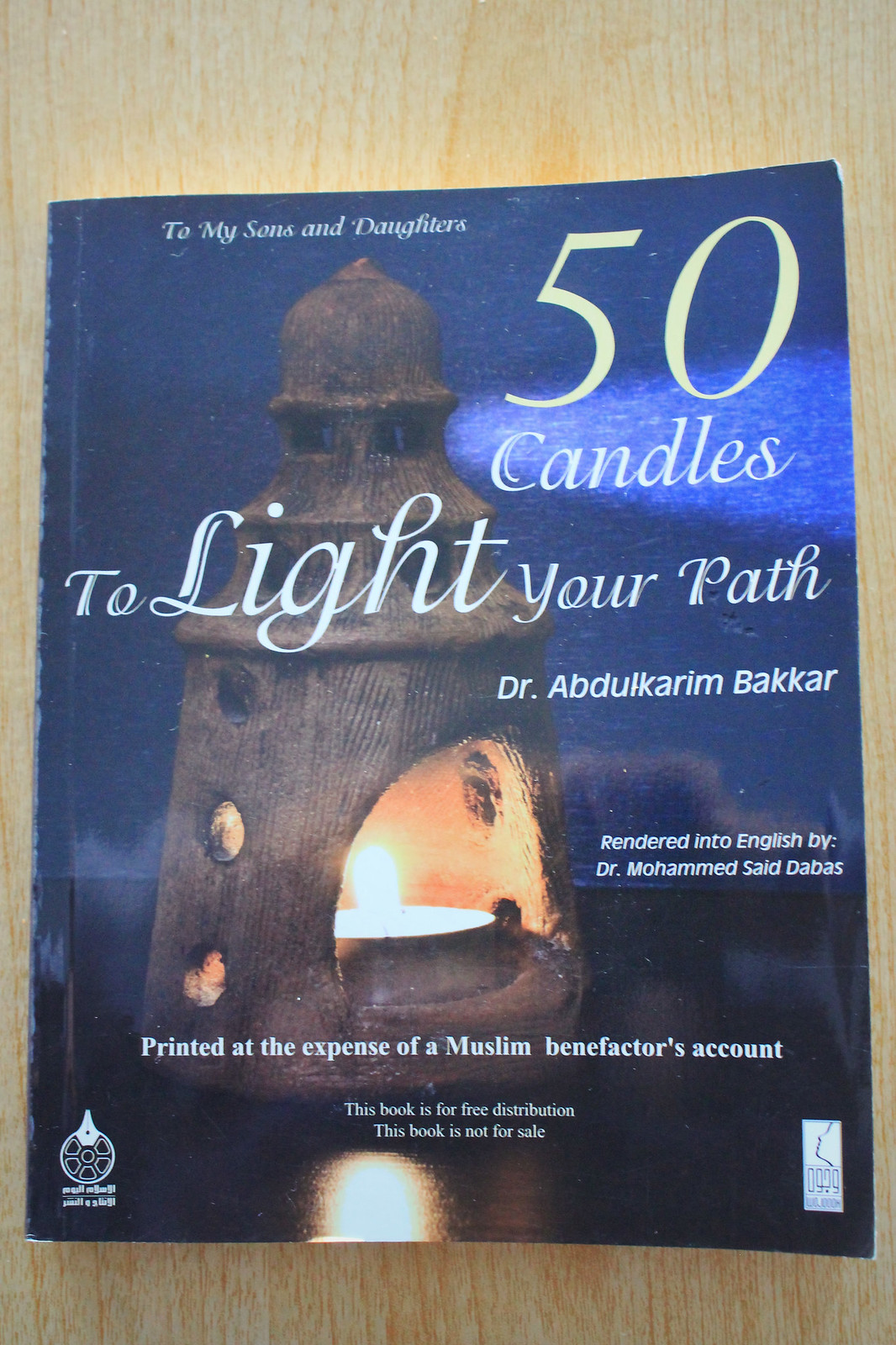
Quick Book Review: Islamic Awakening Between Rejection and Extremism


In this thoughtful work, Yusuf al Qaradawi addresses many of the issues of what most Muslims, especially the youth (in their vulnerable years in studying their religion to solidify their purpose and identity) encounter within themselves, the Islamic tradition, and the communities that they belong to.

While inevitable inner and environmental conflicts occur, for example the tendency to establish certainty in matters of religious belief and practices some eager young Muslims resort to extreme and rigid views and lifestyle and want to impose it in a radical manner to others, while some who may find some interpretations of the religion to be incompatible to their lifestyle or perceived reality and orientation might choose to abandon it altogether.

Dr. Qaradawi gives fatherly advice to young Muslims to the true essence of Islam by drawing examples from how the Prophet (pbuh) dealt with matters that required tact and wisdom, as well as examples from his Companions of how they resolved differences and made decisions that are based on sound judgment and in accordance to the noble principles of Islam. Also included were situational examples of how conflicts among Muslims occurred over trivial matters which are the result of differences that should have been overlooked if those involved understood the essence of flexibility, respect and tolerance in Islam.

This is a must read and timely treatise (even though it was written many years ago) for the Muslim youth who are striving to balance worldly pursuits, faith, and religious endeavors in advocacy for beneficial change.

12 March 2015

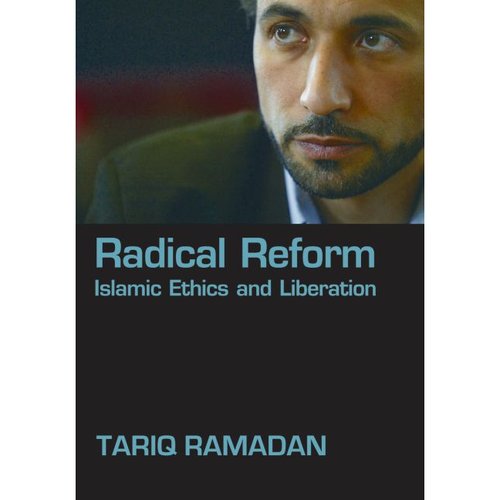
Radical Reform: Islamic Ethics and Liberation


Summary by Dr. Tariq Ramadan:

The road has not always been smooth and the research and study have been long and sometimes very difficult. The reflections and proposals that readers will find here are the outcome of a long, deep immersion in the universe of the “Islamic sciences.” For more than twenty years (nurtured by traditional teaching, accumulated readings, personal research, and the writing of books) I have repeatedly stated that the awakening of Islamic thought necessarily involves reconciliation with its spiritual dimension on the one hand, and on the other, renewed commitment and rational and critical reading (ijtihâd) of the scriptural sources in the fields of law and jurisprudence (fiqh). I have not changed my mind at this point: the luminous heart of Islam is indeed spiritual quest and initiation, and its universal dimension necessarily involves a continued process of reading and rereading, of faithful and innovative interpretation, leading to the formulation of adapted legal rulings (fatâwâ). Today’s Muslims, both in the East and West, urgently need contemporary fiqh, distinguishing what in the Texts is immutable and what may be changed. I tackled this issue systematically in three books using different approaches: in To Be a European Muslim, I presented a new reflection based on the main classical instruments offered by the fundamentals of law and jurisprudence (usûl al-fiqh): critical and autonomous interpretative reasoning (ijtihâd), the public interest and common good (maslahah), and detailed fatâwâ. This approach was meant to enable European (and Western) Muslims to respond to the issues and challenges of their presence in secularized societies where religious reference plays a secondary role in public life. Western Muslims and the Future of Islam took up this reflection with a more direct approach of the issue of the sciences and methodologies at the source: the second part of the book took the form of practical, concrete proposals in such fields as spirituality, education, social and political commitment, interfaith dialogue, and so on. Those two works popularized a thought and methodology that spread well beyond what I had hoped for. Islam, the West and the Challenges of Modernity approached the issue from the standpoint of Muslim majority societies, asking Which project for which modernity? It also studied the social, political, economic, and cultural dimensions of a possible vision for society. The point was, yet again, to strive to achieve faithfulness through movement.

Limits have, however, been reached. The general vision has indeed been renewed; innovative readings have often made it possible to provide original solutions, to overcome withdrawal attitudes, to put an end to victimlike isolation or to sectarian literalism: another relation to oneself and to the West turned out to be possible. Yet drawbacks remained, making it impossible to carry the reflection further and, above all, turning the reform (islâh) movement into a process of continuous adaptation to the order of things . . . however unsatisfactory they might be. It seems obvious that I had to go further and not only, as reformists had done in the past two centuries, question the productions of fiqh, but also its fundamentals, its sources, and the mother science (usûl al-fiqh). Centuries of referring to ijtihâd certainly did make things progress, but this remains highly inadequate because crises are still there and are even getting deeper, and Muslims seem to be at a loss for a vision and projects for the present and future. We seem to have reached the end of a cycle, that which consisted in thinking through revival merely through a renewed reading and interpretation of scriptural sources. Apt distinctions had been made between sharî’ah (the Way to faithfulness including the legal order) and fiqh, between general principles (‘âm) and specific principles (khâs), between immutable norms (thawâbit) and norms subject to change (mutaghayyirât); this had made a renewal movement possible, as Indian-Pakistani thinker Muhammad Iqbâl (died 1938)4 had suggested and hoped. However, as I show in the first section of this book, this is not sufficient when the world’s progress is so rapid, when challenges are so complex and globalization is so unsettling.

Therefore I must go further and raise the issue of the sources of usûl al-fiqh, of the categories that organize them, of the methodologies that result from them and, finally, of the nature of the authority all those elements impart to Text scholars (‘ulamâ’ and especially fuqahâ’). This is what I propose to undertake in the present work: it is, clearly, a new step. The objective is to revisit not only the tools and concrete, historical implementations of fiqh, but also their sources, their categorization, and at the same time their methods, the range of their authority and the nature of the approaches that have been put forward throughout the history of this science (usûl al-fiqh). This approach is the fruit of years of reflection and questioning about the nature of the crises, difficulties, and drawbacks that paralyze contemporary Muslim thought: why does recourse to ijtihâd, so long called for, fail to produce the expected renewal? Why has the innovative, bold, creative spirit of early times given way to timid approaches that only consider reform in terms of adapting to the world and no longer with the will and energy to change it? How can we explain this divide, this huge gap between the “Islamic sciences” (or “sacred sciences”) and all the “other sciences,” defining distinct and well-secured fields of authority, but making it impossible to respond adequately to the challenges of our time? Those questions, among many others, challenge us to go back to the roots of problems, circumscribe their scope and suggest a new approach and a new methodology regarding the fundamentals and sources of usûl al-fiqh.

This book contains three fundamental propositions: the contemporary Muslim world (both East and West) must reconsider the terms and modalities of the reform process (islâh, tajdîd). It is important to distinguish between “adaptation reform,” which requires religious, philosophical, and legal thought just to adapt to the evolutions of societies, the sciences, and the world, and “transformation reform,” which equips itself with the spiritual, intellectual and scientific means to act on the real, to master all fields of knowledge, and to anticipate the complexity of social, political, philosophical, and ethical challenges. To this end—and this is the second proposition—the contents and geography of the sources of Islamic ? usûl al-fiqh must certainly be reconsidered. It cannot be enough to rely only on scriptural sources to examine the relationship between human knowledge (religion, philosophy, the experimental and human sciences, etc.) and applied ethics: the Universe, Nature, and the knowledge related to them must assuredly be integrated into the process through which the higher objectives and ethical goals (al-maqâsid) of Islam’s general message can be established. The consequence of this new geography is important and it leads to our third proposition: the center of gravity of authority in the Islamic universe of reference must be shifted by ranking more clearly the respective competences and roles of scholars in the different fields. Text scholars (‘ulamâ’ an-nusûs) and context scholars (‘ulamâ’ al-wâqi’) must henceforth work together, on an equal footing, to set off this radical reform that we wish for.

I recognize, when writing these lines, that criticisms will certainly be expressed. Some in recent years have questioned my competence and capacity to tackle certain issues related to the Islamic sciences (fiqh, usûl al-fiqh, etc.) and, a fortiori, to suggest solutions. It is worth repeating here that what matters is that such criticisms should stop focusing on the person and instead engage with the only worthwhile debate, that is, to examine the propositions and reflections presented and if necessary to produce a serious and well-argued critique. In launching the Call for a Moratorium on the Death Penalty, Corporal Punishment, and Stoning,5 it was expected that reactions (even those of a few ‘ulamâ’) were going to be passionate and emotional but I was disappointed at the dearth of argued critiques produced after thorough study of the text of the Call. This lack of calm critical debate is, I think, one of the evils undermining contemporary Islamic thought.

During the academic presentations (lectures, conferences, or symposia) that preceded the writing of this book, some interlocutors objected that, according to them, those reflections were not new and that the integration of scientists (from the experimental or human sciences) was already a reality in some Islamic legal councils. I have reservations about this and question the modalities. There are indeed, and they are mentioned several times, fields (such as medicine) where platforms are provided for Text ‘ulamâ’ and scientists to consult with one another and combine their skills, but this reality is an exception far more often than the rule. Besides, my argument is much clearer and more radical than simply calling for punctual “consultation” of experts and specialists (khubarâ’) in the different fields of knowledge: the issue here is to question the essence of categorization between the sources of usûl al-fiqh and, thereby, to state the need to integrate the scientists (‘ulamâ’) of Nature, of the experimental and human sciences, permanently and on an equal footing when higher objectives and ethical goals are to be determined in their respective fields. This approach enables us to suggest a more elaborate set of ethical results (rather than the traditional five or six main objectives6) and an original (horizontal and vertical) categorization of higher objectives. Such an approach offers a framework that does not claim to be definitive but that in effect imposes a critical revision of classical methodologies and typologies.

It might also be objected that I do not always put forward concrete solutions to the various issues raised. Domains must be kept separate: the theoretical work undertaken in the first three parts of this book consists in studying the terminology and categorization of the sciences and the history of the different schools of the fundamentals of usûl al-fiqh. As part of this fundamental reflection, I suggest a new geography of the sources of usûl al-fiqh: this should lead to integrating the Universe and social and human environments (and therefore all related sciences) into the formulation of the ethical finalities of Islam’s message, of which a new presentation and categorization are set forth here. On the basis of this theoretical framework, practical cases are examined, and a number of issues and questions are raised: I have chosen a number of key domains (medicine, the arts and cultures, gender relations, ecology and economy, and secularization, politics, philosophy), which are far from being the only ones but where (within the limited scope of this study) this proposed approach can open new areas for investigation and creativity. The objective here is not to provide answers to each of the questions raised, since the fundamental proposition in this book is to state exactly that specialists must examine those issues, become more involved, and give us the benefit of their skills about matters that are often complex and highly specialized. This present contribution is to question methods rigorously while stating fundamental criticisms involving the formalistic or clearly inadequate nature of the answers proposed. After that, it is up to scholars, scientists, and experts in the various branches of knowledge to provide new, efficient solutions.

Another point must be made clear: this is not a blunt, systematic critique of ‘ulamâ’ and fuqahâ’ in which they are seen as responsible for all the evils that affect Muslim-majority societies and the communities living in the West, in Asia, or in Africa. I address the contemporary Muslim conscience at all levels and strive to make the criticisms constructive and multidimensional. So-called ordinary Muslims must take on their share of responsibility in critical work, in the nature of the issues raised, and in starting in-depth reflection from day-to-day realities. The problem of leadership in the Muslim world is also related to the lack of critical contributions within religious communities, to the passivity of the majority and to their following often exclusively, through emotion or admiration, this or that skilled and/or charismatic scholar or leader. The critique must also include those intellectuals, scientists, or scholars who excel in their fields but who do not take part in intellectual and ethical debates within the spiritual community: they are often content with criticizing “the-incompetence-of-scholars-who-know-nothing-about-the-issues-about-which-they-legislate” but they remain passive observers who fail to take on any responsibility for the crisis of the contemporary Muslim conscience. I therefore call for a general awakening and a critical evaluation of all consciences and all skills, those of ordinary Muslims as well as of intellectuals, scientists, and ‘ulamâ.’ Even non-Muslim experts should, as we shall see, have a part to play in the process, by questioning the contemporary Muslim conscience about a number of issues or by contributing with their skills to the possible resolution of some scientific and/or ethical issues (in the experimental or human sciences).

This study has four different parts. The first three are theoretical and determine the framework through which practical cases are approached in the fourth part. I first examine terminology and the nature of the reform already mentioned above. Second, I present the three main classical schools that defined the fundamentals of usûl al-fiqh: the deductive school, the inductive approach, and the school of higher objectives (al-maqâsid). Third, I suggest “a new geography of the fundamentals of law and jurisprudence” and set forth the basic propositions. Fourth, I discuss a few fields (an arbitrary choice, which moreover did not allow for exhaustive study), in some of which the evolution of Islamic thought has been more-or-less satisfactory (like medicine, although even more specialist involvement is required), while in others real drawbacks can be observed (the arts, cultures, economy, ecology, etc.). The point is to show how, and why, a new methodology is necessary to take up the different challenges of our time. What is required is not, in each scientific field, to try to adapt to social and scientific evolutions, but rather to offer an ethical contribution, more soul, humanity, and positive creativity, to societies, to the sciences, and to human progress.

The reader who wishes to avoid the technical chapters that analyze the Islamic sciences and the fundamentals of usûl al-fiqh, as well as the theoretical development presenting the new geography, can focus on studying the practical cases and the five sections established in part IV. Readers may then decide to read the theoretical part at a later stage. Both a linear reading of the book or an initial approach through the practical cases can be logical, or even complementary, if one keeps in mind the imperative relationships that exist among theoretical criticism, the methodology proposed, and the practical and ethical solutions that this approach aims for. I speak from within a universe of reference whose classical categorizations and methodologies I question so as to be able to reconcile the contemporary Muslim understanding with the universality of its message and the complexity of contemporary challenges. In so doing, the limits and the ambitions of the task at hand must not be forgotten.

02 February 2015

11 September 2014

08 May 2014

Finally

Finally, after counting many years, my study was organized. I had shared here my frustrations of having a bookshelf and study on my room. Articles on the shelf include psychology, literature, coffeetables and art. Islamic books are on the writing table and are not shown. Alhamdulillah, it was a dream come true.


24 April 2014

How Islam Created the Modern World


Front cover of How Islam Created the Modern World by Mark Graham (2006). The picture depicts al-Razi stained on a glass window in Princeton University Chapel.


Review of How Islam Created the Modern World by Mark Graham. Beltsville, Maryland: Amana Publications, 2006. Hardcover, 208 pages. ISBN-10: 1590080432 - ISBN-13: 978-1590080436.

For several centuries, corresponding to the European Middle Ages, Baghdad was the intellectual center of the world. It was there that a huge community of translators and scholars appropriated in Arabic culture the knowledge of ancient civilizations and combined it with the cultural traditions and imperatives of the Islamic context to create a scientific, mathematical and philosophical golden age. 

This golden age of Islam embraced all the products of human spirit practiced at that time, including different scientific disciplines, medicine, symbolic and artistic creation, social organization and material culture, including productive branches of applied knowledge in industry, architecture and the making of instruments.

These accomplishments were so numerous and original that they realised an unprecedented stage of civilization and occupied a high rank in human creation. Being unique and at the front of inventivity, they gained the admiration of other peoples who were aware of the existence of these treasures. Hence a dynamic process of transmission was set up between the Muslim and the Latin worlds all over the Mediterranean coasts.

This transfer process was progressive and uninterrupted for several centuries, mainly in the Andalus, but also in Sicily, Southern France and in the Middle East during the Crusades.

At the dawn of the Renaissance, Christian Europe was wearing Persian clothes, singing Arab songs, reading Spanish Muslim philosophy and eating off Mamluk Turkish brassware. This is the story of how Muslims taught Europe to live well and think clearly. It is the story of how Islam created the Modern World.

It is this story of civilization that Mark Graham describes in his book. Who would have thought an Edgar-winning mystery novelist could explain to us in clear, concise language that without Islam, western civilization as we know it might not exist? Underlying that dramatic proposition is an important thesis: The ongoing debate about a supposed "clash of civilizations" misses the reality that Islam and the West developed from essentially the same roots and, despite their rivalry, helped each other in profound ways along the path to "civilization". In fact, the West and Islam can be viewed as merely different faces of the same civilization. He explains how Arabic-speaking Muslims not only preserved the scientific and philosophical knowledge of the Greeks but also "made it their own", greatly extending and improving on it. For example, the newly developed concepts of Andalusian philosopher Ibn Rushd (Averroes) found their way into western universities, where they were viewed as challenges to church orthodoxy and ushered in the beginnings of the scientific method.

Muslim thinkers, poets and scientists set the stage for the European Renaissance: Graham points out specific borrowings in Dante's Divine Comedy from the works of the great Andalusian writer Ibn ‘Arabi, and shows how these intercultural transfers were likely mediated by Dante's mentor Brunetto Latini, who had brought back learning from the libraries of Toledo, where, even after the Christian reconquista Muslims and Christians continued to live together and to work along the same paths as when the Muslims were the rulers of the Iberian peninsula.

In other places of his book, Graham shows more concrete ways in which the West is indebted to Islam: A Mongol invasion of Europe was thwarted when Egypt's Mamluk army defeated the Mongols at ‘Ain Jalut, Palestine, in 1260. Imagine how different the West would be today if the Mongols had triumphed! As it turned out, the West never again faced the threat of Mongol invasion after ‘Ain Jalut, and the breather which thus provided Europe a chance to absorb what Graham terms "the other great gift of Islam—knowledge".

Contents
Acknowledgements 9
Foreword 11
Introduction 15
Chapter 1: Islam becomes an empire 17
Chapter 2: The House of wisdom 37
Chapter 3: Hippocrates wears a turban 51
Chapter 4: The great work 63
Chapter 5: Beyond the Arabian nights 77
Chapter 6: Islam's secret weapon 97
Chapter 7: A medieval war on terror 117
Chapter 8: The first World war 139
Chapter 9: Raiders of the last library 157
Chapter 10: Children of Abraham, children of Aristotle 175
Appendix 1: What the Qur'an says 183
Appendix 2: Arabic words in English 185
Further reading 189
Index 197

Source: Muslim Heritage
Back to Top

Labels

Baguio Series (15) art (70) book excerpt (57) essay (36) food (39) ideals (148) insights (97) introspection (35) med school (10) monthly photo snippets (27) notes (31) photography (218) places (127) poetry (1) psychology (43) recipes (9) review (31) science (10) travel (76)

Blog Archive