

30 November 2013
26 November 2013
The Excellence of Gathering in which Allah is Remembered
Allah the Exalted says:

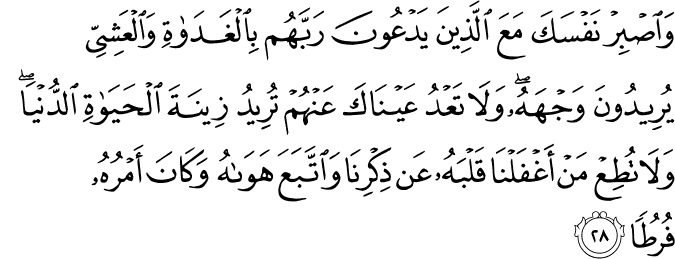
"And keep yourself (O Muhammad صلى الله عليه وسلم) patiently with those who call on their Lord (i.e. your companions who remember their Lord with glorification, praising in prayers, etc., and other righteous deeds, etc.) morning and afternoon, seeking His Face, and let not your eyes overlook them, desiring the pomp and glitter of the life of the world; and obey not him whose heart We have made heedless of Our Remembrance, one who follows his own lusts and whose affair (deeds) has been lost."
- Qur'an (Surah Al Kahf 28)
Abu Hurayrah رضي الله عنه reported: The Messenger of Allah, the Exalted, has teams of angels who go about on the roads seeking those who remember Allah. When they find some people remembering Allah they call to one another and say, 'Come to what you are looking for,' and they surround them with their wings until the space between them and the lowest sky is fully covered. Allah, the Exalted and Glorious, asks them (although He is best informed about every thing): 'What are my slaves saying?' They say: 'They are glorifying Your Tasbih, Tahmid, Takbir, Tamjid, (i.e., they were declaring the Perfectness, praising, remembering the Greatness and Majesty of Allah).' He asks: 'Have they seen Me?' Thereupon they reply: 'If they were to see You, they would engage more earnestly in worshipping and glorifying You and would extol You more.' He would say: 'What do they beg of Me?' They say: 'They beg You for Your Jannah.' Allah says, 'Have they seen my Jannah?' They say, 'No our Rubb.' He says: 'How would they act if they were to see my Jannah?' They reply, 'Were they to see it, they would more intensely eager for it.' They (the angels) say, 'They seek Your Protection.' He asks, 'Against what do they seek My Protection?' They (the angels) say, Our Rubb, from the fire of Hell.' (He, the Rubb) says, 'Have they seen the fire of Hell?' They say, 'No. By Your Honour, they have not seen it.' He says: 'How would they act if they were to see My Fire?' They would say: 'If they were to see it, they would more earnest in being away from it and fearing it. They beg of Your forgiveness.' He says: 'I call you to witness that I hereby grant pardon to them and confer upon them what they ask for; and grant them protection against what they seek protection from.' One of the angels says: 'Our Rubb, there is amongst them and such slave who does not belong to the assembly of those who are participating in in Your remembrance. He passed by them and sat down with them.' He says: 'I also grant him pardon because they are the people of virtue of whom their associates will not be unfortunate.'"
[Al-Bukhari and Muslim]
(The narration in Muslim is also the same with minor changes in wordings).
[Source: Riyad Us-Saliheen (Gardens of the Righteous) Volume 2 by Al-Imam Abu Zakariya Yahya bin Sharaf An-Nawawi Ad-Dimashqi]
"And keep yourself (O Muhammad صلى الله عليه وسلم) patiently with those who call on their Lord (i.e. your companions who remember their Lord with glorification, praising in prayers, etc., and other righteous deeds, etc.) morning and afternoon, seeking His Face, and let not your eyes overlook them, desiring the pomp and glitter of the life of the world; and obey not him whose heart We have made heedless of Our Remembrance, one who follows his own lusts and whose affair (deeds) has been lost."
- Qur'an (Surah Al Kahf 28)
Abu Hurayrah رضي الله عنه reported: The Messenger of Allah, the Exalted, has teams of angels who go about on the roads seeking those who remember Allah. When they find some people remembering Allah they call to one another and say, 'Come to what you are looking for,' and they surround them with their wings until the space between them and the lowest sky is fully covered. Allah, the Exalted and Glorious, asks them (although He is best informed about every thing): 'What are my slaves saying?' They say: 'They are glorifying Your Tasbih, Tahmid, Takbir, Tamjid, (i.e., they were declaring the Perfectness, praising, remembering the Greatness and Majesty of Allah).' He asks: 'Have they seen Me?' Thereupon they reply: 'If they were to see You, they would engage more earnestly in worshipping and glorifying You and would extol You more.' He would say: 'What do they beg of Me?' They say: 'They beg You for Your Jannah.' Allah says, 'Have they seen my Jannah?' They say, 'No our Rubb.' He says: 'How would they act if they were to see my Jannah?' They reply, 'Were they to see it, they would more intensely eager for it.' They (the angels) say, 'They seek Your Protection.' He asks, 'Against what do they seek My Protection?' They (the angels) say, Our Rubb, from the fire of Hell.' (He, the Rubb) says, 'Have they seen the fire of Hell?' They say, 'No. By Your Honour, they have not seen it.' He says: 'How would they act if they were to see My Fire?' They would say: 'If they were to see it, they would more earnest in being away from it and fearing it. They beg of Your forgiveness.' He says: 'I call you to witness that I hereby grant pardon to them and confer upon them what they ask for; and grant them protection against what they seek protection from.' One of the angels says: 'Our Rubb, there is amongst them and such slave who does not belong to the assembly of those who are participating in in Your remembrance. He passed by them and sat down with them.' He says: 'I also grant him pardon because they are the people of virtue of whom their associates will not be unfortunate.'"
[Al-Bukhari and Muslim]
(The narration in Muslim is also the same with minor changes in wordings).
[Source: Riyad Us-Saliheen (Gardens of the Righteous) Volume 2 by Al-Imam Abu Zakariya Yahya bin Sharaf An-Nawawi Ad-Dimashqi]

06 November 2013
Prayer
O Lord, the Tribulations that You give to me, are Honors that I gladly accept. For through them, I gain strength and wisdom, I become closer to You, My beloved Creator.I do not seek anything but Your Forgiveness, Your Pleasure, Your Mercy, Your Face. I will praise and glorify You for the rest of my life, in ease and hardship. You alone Whom I seek.
05 November 2013


Two Persons Worthy of Being Envied
The Messenger of Allah صلى الله عليه وسلم gave glad tidings to anyone who undertakes the task of seeking knowledge. Abu Hurayrah رضي الله عنه relates that the Prophet صلى الله عليه وسلم said,
"For him who embarks on the path of seeking knowledge, Allah will ease for him the way to paradise."
and he also said,
"Only two persons are worthy of being envied; a person upon whom Allah bestows riches and gives him the power to spend it in a righteous cause; and a person upon whom Allah bestows wisdom by which he judges and which he teaches."
04 November 2013
The Highest Form of Love
A heart is inherently in need of God in two respects: One is worship, which is the "purposive reason," and the other is asking for God's aid and putting trust in Him, which is the "working reason." The heart, therefore, will never be useful, successful, blessed, pleased or satisfied except by worshipping God.
Supposing the heart obtained all the pleasures that creatures enjoy, it will never feel at rest or contented because there is in it "inherent need" to God. For in God alone the heart delights, and God alone is its adored beloved, and here the heart gets rest and satisfaction.
In fact, this will not happen but by the Providence and Help of God, for none but God can provide these things to the heart which is always in need of the fact that: "It is Thee we worship, and for Thy aid we ask" (Qur'an 1:5). If the heart was helped to obtain what it would like and want without worshipping God, it would obtain only pain, pity, and agony in this life, and it will never get rid of these unless God is its true love, and all other sorts of love are for His sake i.e. none will be loved for its own sake except God.
If this was not realized, the other fact cannot be realized, namely, "There is no God but Allah" (La ilaha illa Allah) neither can the other facts of Tawheed (Monotheism) - Slavery and Love of God, and he wlll have defective belief.
He who worked for this question while not asking for God's aid or putting trust in Him, or feeling poor and in need of Him, would not reach it. Whatever God willed, so it will be, and whatever He willed not, it won't. Man therefore is always in need of God Who is his aim and destination, and the worshipped Lord, whose help is sought, and in whom trust we put.
- Ibn Taymiyyah
30 October 2013
The Signs of a Hypocrite
Narrated 'Abdullah bin Amr رضي الله عنه: The Prophet صلى الله عليه و سلم said,
"Whoever has the following four (characteristics) will be a pure hypocrite, and whoever has one of the following four characteristics will have one characteristic of hypocrisy unless and until he gives it up.
"Whoever has the following four (characteristics) will be a pure hypocrite, and whoever has one of the following four characteristics will have one characteristic of hypocrisy unless and until he gives it up.
1. Whenever he is entrusted, he betrays (proves dishonest).
2. Whenever he speaks, he tells a lie.
3. Whenever he makes a covenant, he proves treacherous.
4. Whenever he quarrels, he behaves in a very imprudent, evil and insulting manner."
[Source: Sahih Al-Bukhari Vol.1, Hadith no. 24]
[Source: Sahih Al-Bukhari Vol.1, Hadith no. 24]
Invocations
Allahumma aslamtu wajhi 'ilaika, wa fawwadtu amri 'ilaika, wa 'aljatu zahri 'ilaika raghbatan-wa rahbatan 'ilaika. La malja' minka illa 'ilaika. Allahumma amantu bikitabikal-ladhi anzalta wa binabiyikal-ladhi 'arsalta.
O Allâh! I surrender to You and trust You in all my affairs and depend upon You for Your Blessings with hope and fear of You. There is no place of protection and safety except with You. O Allâh! I believe in the Book (the Qur'an) You have revealed and in the Prophet (Muhammad صلى الله عليه و سلم) whom You have sent.
Allahumma ba'id baini baina khatayaya kama ba- 'adt-ta bainal mashriqi wal-maghribi. Allahumma naqqini min khataya kama yunaqqa-ththawbul-abyadu minad-danas. Allahumma-ghsil khatayaya bil-ma'i wath-thalji wal-barad.
O Allâh! Set me apart from the sins as east and west are set apart from each other and cleanse me from sins as a white garment is cleansed of dirt. O Allâh! Wash off my sins with water, snow and hail.
Allahumma inni a'udhu bika min adhabil-qabri, wa a'udhu bika min fitnatil-masih-id-dajjal, wa a'udhu bika min fitnatil-mahya wal-mamati. Allahumma inni a'udhu bika minal-ma'thami wal maghrami
O Allâh! I seek Your protection against the punishment of the grave and against the trial and afflictions of the False Messiah (Masih Ad-Dajjal) and the trial and afflictions of life and death. O Allâh, I seek Your protection against sins and debts.
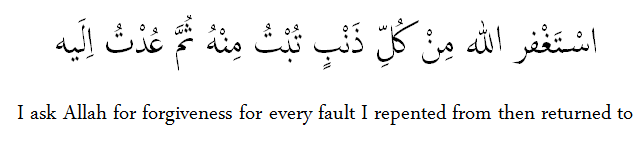
Allahumma inni zalamtu nafsi zulman kathiranw-wala yaghfirudh-dhunuba illa anta faghfirli maghfiratam-min 'indika, war-hamni innaka antal-Ghafur-ur-Rahim
O Allâh! I have done great injustice to myself and none except You forgive sins, so please forgive me and be Merciful to me as You are the Oft-Forgiver, the Most Merciful.
Ayatul Kursi (The Verse of The Throne)
Allâh! Lâ ilâha illa Huwa (none has the right to be worshipped but He), the Ever Living, the One Who sustains and protects all that exists. Neither slumber, nor sleep overtake Him. To Him belongs whatever is in the heavens and whatever is on earth. Who is he that can intercede with Him except with His Permission? He knows what happens to them (His creatures) in this world, and what will happen to them in the Hereafter. And they will never compass anything of His Knowledge except that which He wills. His Kursî extends over the heavens and the earth, and He feels no fatigue in guarding and preserving them. And He is the Most High, the Most Great.
- Qur'an (Surah Al Baqarah 255 [Ayatul Kursî])
29 October 2013
Remaining Patient
I shall remain patient until patience itself cannot bear my patience anymore. I shall remain patient until Allah grants permission to my affair. And I shall remain patient until patience knows that I kept patient on a matter which required patience.- Imam Ash-Shafi’i
Your Lord Will Give You

"And verily, your Lord will give you so that you shall be well-pleased."
- Qur'an (Surah Ad Duhaa 5)
26 October 2013
Patience and Prayer

"O you who have believed, seek help in patience and prayer; surely Allah is with the patient."
- Qur'an Surah Al Baqarah 153
Fitrah (The Innate Human Nature): A Prelude
Allah has created His slaves in such a way that they are free from false beliefs, and He has created them with the readiness to accept the sound beliefs, but when they are born, the devils from among mankind and the jinn surround them and corrupt their sound nature (fitrah), but Allah protects those whom He wishes to the Truth.
Allah knows those who will remain steadfast and adhere to the sound fitrah and whose fitrah will be changed. He knows that from eternity and it is written. According to the Hadith narrated by Muslim, 'Iyaad ibn Hammar said, the Messenger of Allah صلى الله عليه و سلم said that Allah the Exalted said,
"I have created My slaves as Haneefs (pure monotheisths), then the Shayateen (devils) mislead them, forbidding them that which I have permitted them, and commanding them to associate others in worship with Me for which I have not revealed any authority."
[Source: Islamic Creed Series: Vol. 8, pp. 86-87, by Dr. Umar S. Al Ashqar]
The Prayer of Prophet Muhammad صلى الله عليه و سلم When The People of Ta'if Hurt Him
اللهم انى اشكو اليك ضعف قوتى , وقلة حيلتى وهوانى على الناس , يا أرحم الراحمين , انت رب المستضعفين وانت ربي , الى من تكلنى ؟ الى بعيد يتجهمني , ام الى عدو ملكته أمرى ؟ ان لم يكن بك غضب علي فلا أبالى ولكن عافيتك أوسع لى من ذنوبى , اعوذ بنور وجهك الذي أشرقت له الظلمات وصلح عليه حال الدنيا والآخرة من ان ينزل على غضبك او يحل بي سخطك , لك العتبى حتى ترضى , ولا حول ولا قوة الا بك
"Lord! To You I complain of my weakness, lack of means, and my humility among the people. My Gracious Merciful Lord! You are the Lord of the weak people and You are my Lord: whom do you entrust me to? To a stranger frowning at me? Or to an enemy You gave him power over me? Verily if You are not angry with me, then I care not and Your bliss is better to me. I seek refuge in the Light of Your Face, by which all darkness were illuminated, and by which all matters of this world and Hereafter are done with, that no indignance should occur to me. You may blame however You please; I have no power or authority but You."
Will-Power and Attainment of Perfection
A human being is created with no firm will-power. He has a tendency to sway from this and that, and that is a part of his nature. But he can gain firmness and strength of will and faith by striving to attain the perfection of the purpose of his creation, that is: slavery to Allah. It is said that,
"When Allah formed Adam in Paradise, He left him for as long as He willed to leave him, and Iblees (Satan / Devil) started to walk around him, looking at him to see what he was. When he saw that he was hollow, he knew that this creature had been created with a disposition such that he has no firm will-power."- Prophet Muhammad صلى الله عليه و سلم[Source: Sahih Muslim 4/2016, no. 2611]
That is why, Shaykh Al Islam (may Allah have mercy on him) further said,
"The most perfect, the best, the most supreme, the finest, and the most righteous people are those who have most perfect slavery to God. This in fact, is the reality of the Religion of Islam by which God has sent His Messengers, and by which He revealed His Books. This reality is that man should submit to God only, not to others."- Ibn Taymiyyah[Source: Al Ubudiyyah]
17 October 2013
Protecting Ourselves From Wrong
"Whoever sees an evil deed being performed should change it with his hand. If he is not able to change it with his hand, then (he should change it) with his tongue. And if he is not able to change it with his tongue, then (he should change it) with his heart, and that is the weakest form of Eeman."
- Prophet Muhammad صلى الله عليه و سلم
"The best way to protect ourselves from wrong is to keep away from anything that could lead to it. One of the favorite tricks of the Shaytân, which deceives everyone except those who are clever enough to see it, is to show a person some goodness in a wrong thing, and call him to go towards it; when the person gets close to it, he falls into the trap."- Ibn al Qayyim"A man only commits haram actions because of the weakness of his faith and love; if he does makruh actions it is because he does not have enough hatred towards it, or because of the strength of the love for it that overwhelmed his heart. No person does any haram action, such as immoral conduct both obvious and hidden, or sin and transgression, or associates things with Allah for which He has sent down no authority, or speaks about Allah without knowledge, except because of weakness of faith, because of lack of knowledge and belief, or because of the weakness of love and hate. But if his faith is basically sound, which means that he believes in all that Allah sent, then when the believer does these actions, he feels hatred and resentment towards them, and if he does them then it is because his whims and desires overwhelmed him, so when doing them he inevitably hates them and fears Allah’s punishment for them, and he has the hope that he will rid himself of the consequences, either by repenting or by doing good deeds or by being forgiven, and so on. But if he does not hate them and does not fear Allah with regard to them and does not hope for His mercy, then this is not a believer under any circumstances; rather he is a kafir or a hypocrite."
- Ibn Taymiyyah

16 October 2013
Humility in Knowledge
[Source: Page 41 - The Excellence of Knowledge (Fadhl Ilm) by al-Hāfiz ibn Rajab al-Hanbalī]